
All Posts
Seasons
The best times of year to surf in San Blas
From July to October the south swells come in and the points around Matanchen Bay turn on. But San Blas, and its surrounding areas, has rideable waves all year long.
San Blas has been a surfers' destination since the sixties, because of the quality of its waves.
Here we have wave seasons the same way we have seasons of the year.
In San Blas you can surf in any month. What changes from one season to the next is the size, the direction of the swell, and which one of all the breaks turns on.
When is the best time to surf in San Blas?
The best season is summer, between July and October.
In those months the San Blas area gets south swells, which is the direction that comes in straight at the points that line Matanchen Bay.
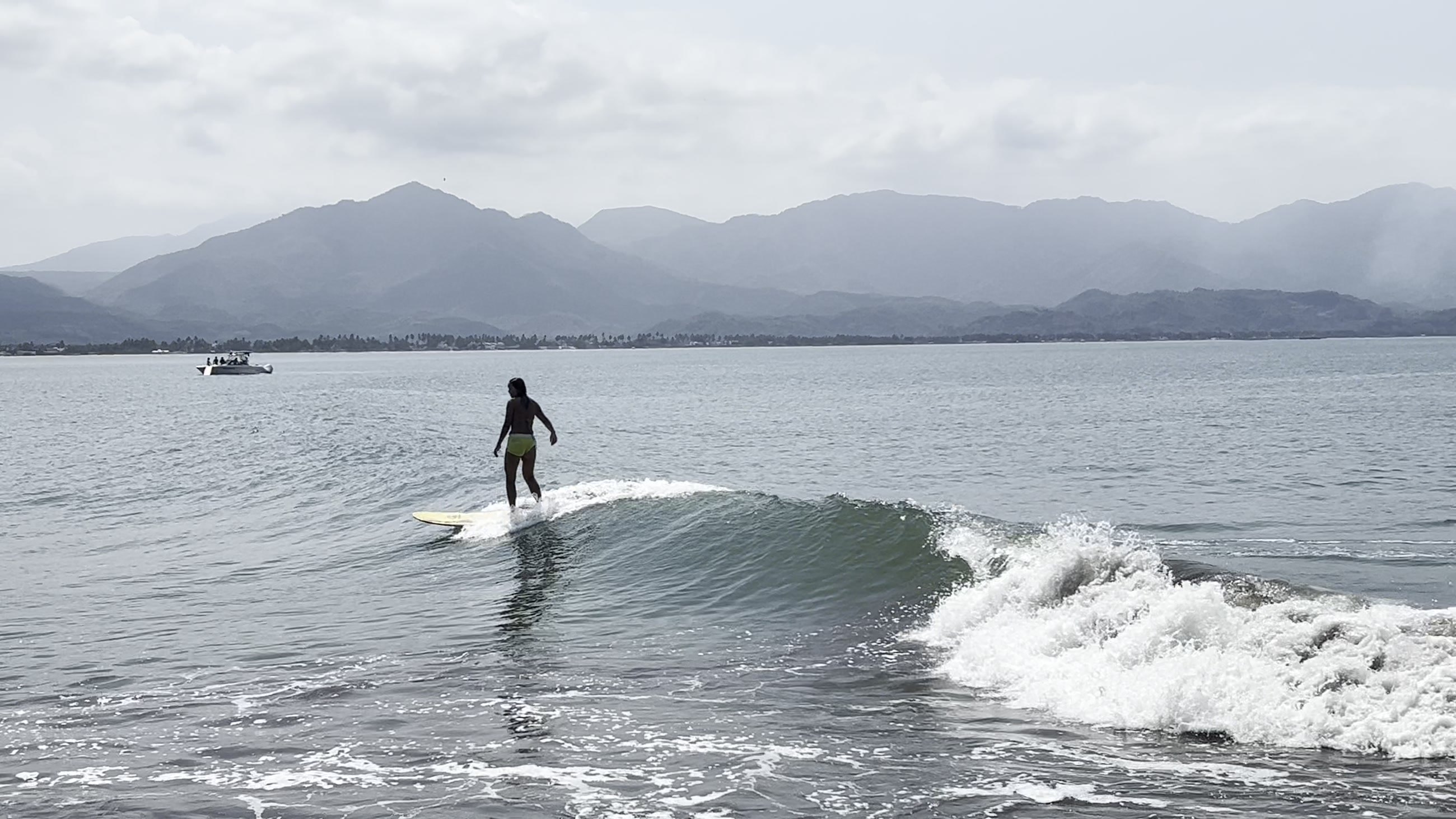
They're well-formed waves with a pretty long ride, with rights on the north side of the bay and lefts on the south side. The size in those months usually runs between 2 and 6 feet.
Summer is also the rainy season and cyclone season, so a swell can show up with wind and storm along with it. There's more on that below, in rain, storms and hurricanes.
The month-by-month wave calendar
Here's the whole year: the size you can usually expect, how the ocean behaves, and who each season works for.
| Months | Size | What the ocean is doing | Who it works for | Wetsuit |
|---|---|---|---|---|
| December to February | 1 to 3 feet | Small surf, concentrated at playa El Borrego | For anyone starting out | Neoprene top or spring suit mornings and afternoons |
| March to June | 2 to 6 feet | The first swells of the year, and the cleanest | For people who already surf, and for anyone who needs more wave | No |
| July to October | 2 to 6 feet | South swells, the points turned on, with rain and wind in the mix | For people who already surf | No |
| November | 2 to 4 feet | The south swell drops off and the ocean settles down | For every level | No |
The points of Matanchen Bay
Matanchen Bay has points at both of its ends, and each end breaks a different way.
On the north side of the bay are the rights:
- Big Stoners
- Little Stoners
- Las Islitas, first point
- Las Islitas, second point
- Las Islitas, third point
On the south side are the lefts:
- Aticama
- Los Cocos
- Santa Cruz
These are the points that turn on with the south swell, and that's why summer is their season.
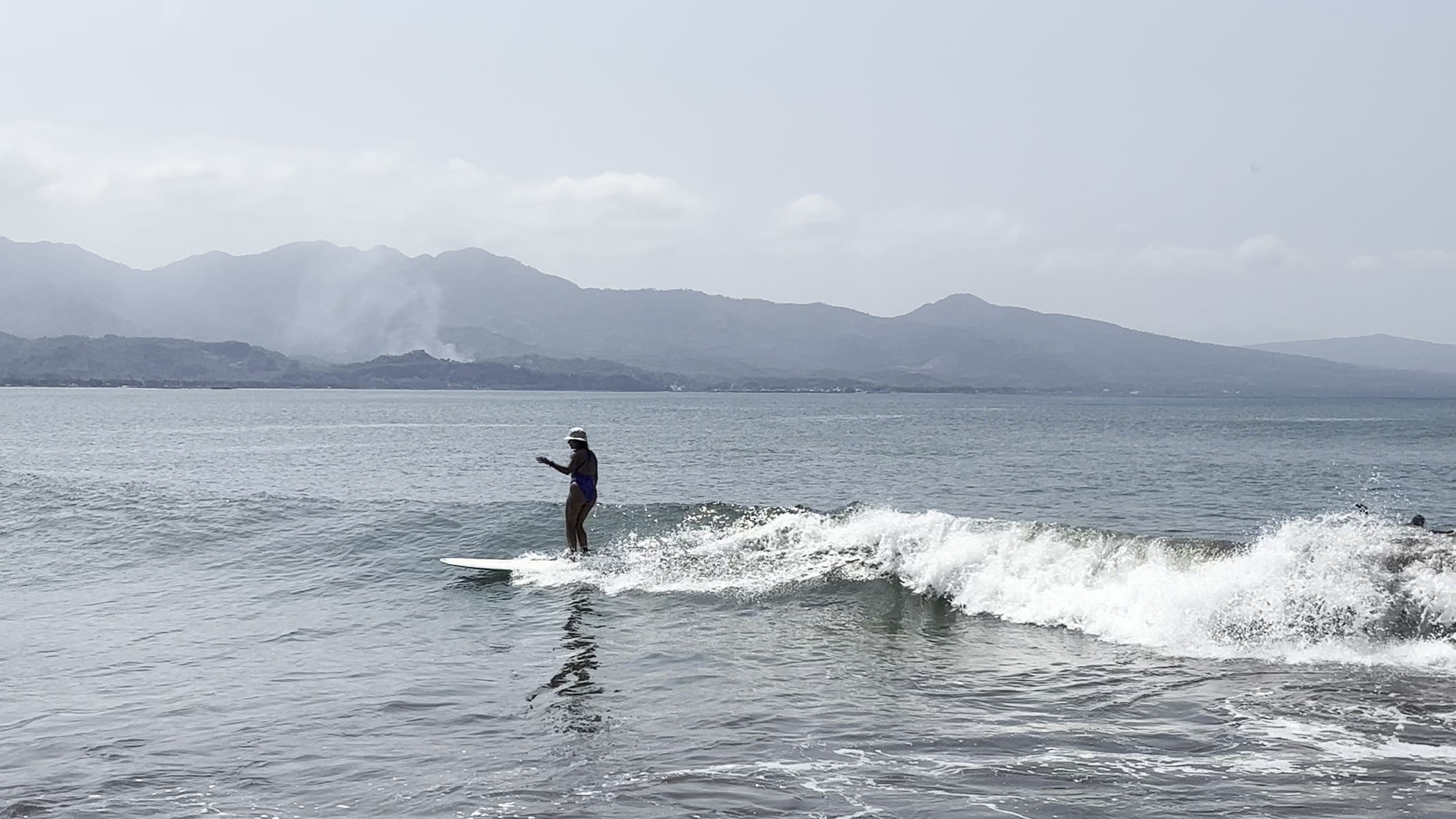
The longest wave in the world, at Las Islitas
In the seventies, Matanchen Bay was recognized with the Guinness record for the longest wave in the world.
The record happens at Las Islitas, when the three points connect: the third into the second, and the second into the first. The distance is roughly 5,600 feet (1,700 meters).
Other places have beaten it since. But the ride is still long enough to set your legs on fire.
A good ride these days runs around 3,300 feet (1 kilometer), on a longboard or on a stand-up paddle board. And if a good summer swell comes through, second point can connect to first point and the ride can reach 4,900 feet (a kilometer and a half).
In time, it feels like this:
- From the second point to the bay, two and a half to three minutes
- From the first point to the bay, a minute and a half to a minute forty-five
The waves of San Blas and the river mouths
Outside Matanchen Bay, San Blas has beach break waves and river-mouth waves.
At playa El Borrego there's the town beach break, and on that same beach are the second jetty and la puntilla.
The second jetty is a right. La puntilla is a river mouth, where the left dominates.
North of San Blas are the Cegada river mouth and Asadero river mouth. Both are river mouths, and at both of them the left dominates.
Farther south, on the line between the municipalities of San Blas and Compostela, is the point at Platanitos, which technically sits on playa Tortugas, at the river mouth.
Platanitos switches hands with the season: in winter the right dominates and in summer the left dominates.
Having that many different shorelines in so little distance is what makes it almost always possible to find somewhere to paddle out.
March to June, the first swells
In March and April the first swells of the year come in, and they tend to be the cleanest.
Normally one or two good-sized swells show up, without the wind or the storm that comes along with them in summer.
From March to June the size can vary between 2 and 6 feet. November behaves about the same, between 2 and 4 feet, already on its way down.
These are months for people who already know how to surf, and also for anyone who's starting out but already needs a slightly bigger or slightly stronger wave.
Winter at playa El Borrego
From December to February the surf around San Blas is small, and it's concentrated mainly at playa El Borrego.
That happens because playa El Borrego is more exposed to the open ocean, and it tends to get surf when the points in the bay are flat.
The size in those months runs between 1 and 3 feet.
It's the ideal season to get started and to work on the fundamentals you need in order to enjoy a better wave in summer.
The winter wetsuit
In winter a wetsuit is worth bringing, since the combination of cooler water and wind can leave you cold.
The water drops to about 70 to 75 °F (21 to 24 °C) in winter, and from July to October it runs between 84 and 88 °F (29 to 31 °C).
The best option is a 1 or 2 mm wetsuit jacket, or a spring suit. If you get cold easily, a long-sleeve shorty would be perfect for you.
It's from December to February, in the mornings and the afternoons, that you need it most.
Rain, storms and hurricanes
From July to October is the rainy season and storm season, and it's when there can be hurricanes.
September and October are when the chance is highest. In October, specifically, there's a high chance of a hurricane making landfall in the San Blas area.
That's why the summer swells vary so much: the same swell that turns the points on can arrive with wind and leave the ocean choppy.
It's the reason the first swells of March and April tend to be cleaner than the ones in August.
How many people are in the water
The most special thing about surfing San Blas and the area around it is that you can still enjoy the waves without that many people in the water.
Sometimes you might find yourself out there surfing alone.
And when there are people, it's usually five or eight people in the water.
With five people at a point it starts to feel a little crowded. But five people at the beach break doesn't feel crowded at all.
If you're learning to surf, this is the biggest advantage San Blas offers.
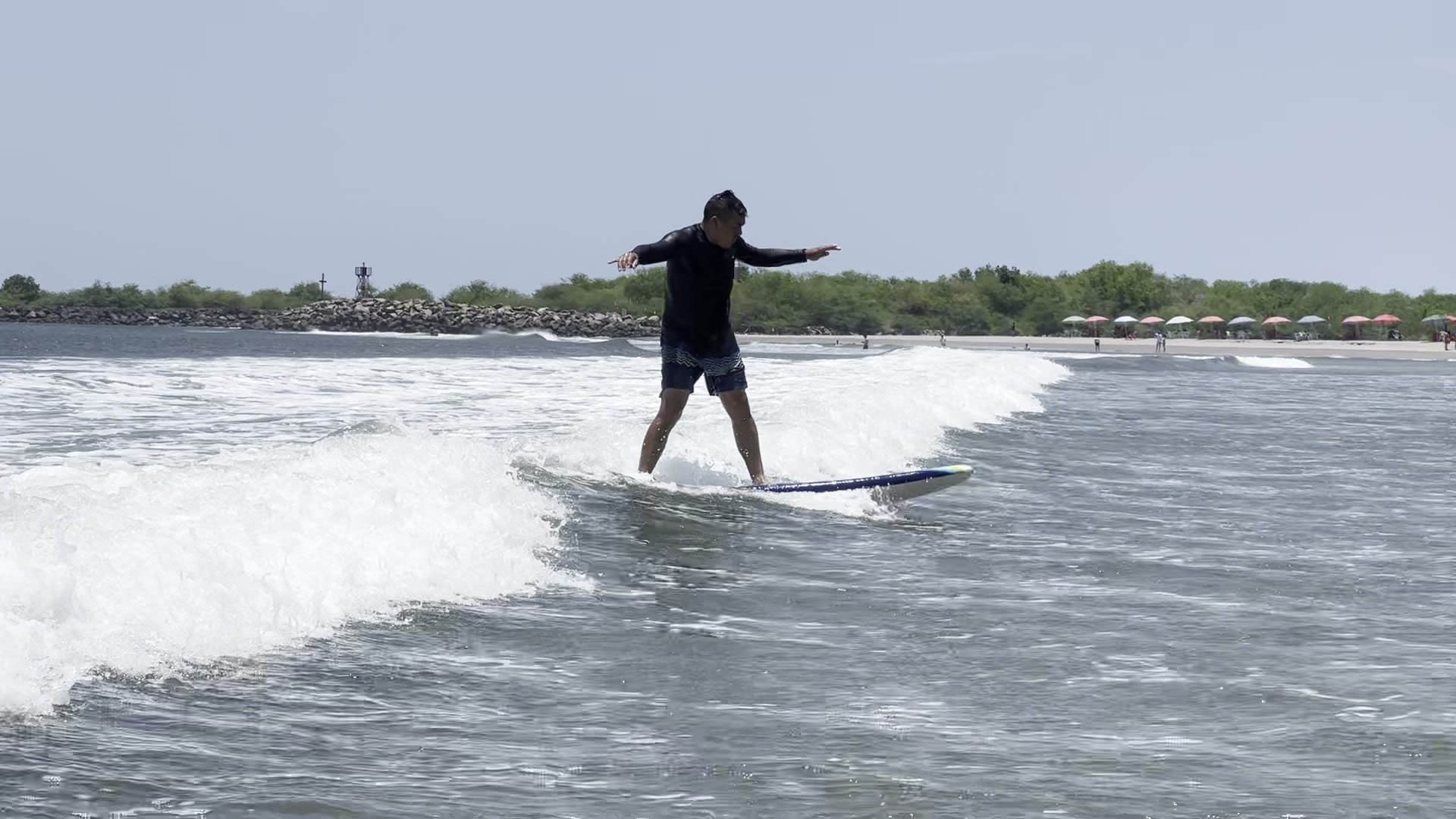
Sandbar Surf School lessons, season by season
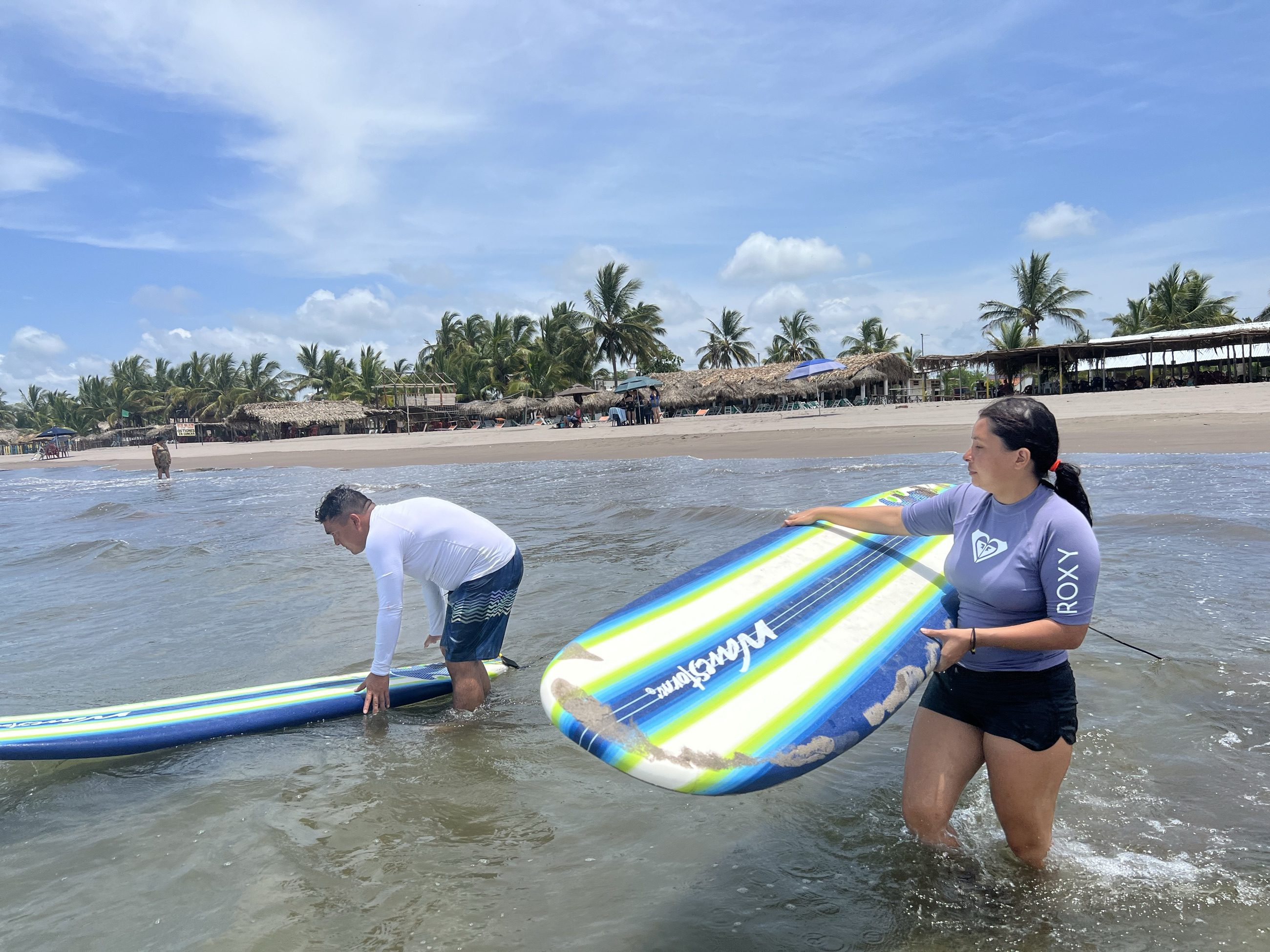
In winter the lessons are mainly at playa El Borrego.
In summer, or whenever there's surf, they can be at the first point of Las Islitas, or a combination of playa El Borrego and the first point.
They're scheduled according to the forecast for ocean conditions and the number of lesson days you take.
Go explore San Blas and its waves
In San Blas you can surf during any month of the year. What matters is keeping realistic expectations, having patience, and being willing to explore and venture out a little.
But summer, without a doubt, is the best time of year to come surf San Blas.
If you have any questions, don't hesitate to get in touch.